Training your dog to stay focused outdoors can be a challenging yet rewarding experience. You should start in a calm setting to establish basic commands before gradually introducing distractions. It's vital to understand your dog's triggers and use positive reinforcement to encourage focus. Commands like "watch me" can help maintain eye contact even when the environment changes. But what happens when you increase the complexity of distractions? How do you guarantee your dog remains attentive as you practice in diverse settings? There are effective strategies to explore that will keep your dog engaged and responsive.
Identify Common Distractions
When it comes to training your dog, distractions can really throw a wrench in your plans. You might find your dog suddenly ignoring commands, or worse, running off after something unexpected. That's why it's essential to identify common distractions beforehand. By knowing what might catch your dog's attention, you can better prepare and react during training sessions.
Start by observing your dog's behavior in different environments. Are they easily drawn to other animals like squirrels or birds? Maybe passing cars or cyclists are more enticing?
Pay attention to environmental noises, such as loud construction sounds or barking dogs, that might disrupt your dog's focus. City parks, with their hustle and bustle, can present a variety of these distractions.
People, too, can be a major distraction, especially if your dog is sociable. Kids playing, joggers, or even a friendly stranger can tempt your dog to abandon training.
Also, consider common distractions like food or litter that might be enticing during a walk.
Understand Your Dog's Triggers
To understand your dog's triggers, start by identifying the sources of distractions that catch their attention.
Observe your dog's behavioral patterns in different situations to pinpoint specific triggers.
Evaluate environmental factors like noise levels or other animals that might influence their reactions.
Identify Distraction Sources
Understanding your dog's triggers is vital in teaching them to avoid distractions effectively. To identify these distraction sources, start by paying close attention to your dog's behavior during outdoor training sessions. Notice what catches their attention—be it other dogs, passing cars, squirrels, or even certain smells. Each dog is unique, so it's important to observe what specifically draws your dog's focus away from you.
Once you've identified potential distractions, create a list of these triggers. This list will help you prioritize which distractions to tackle first. For example, if your dog is easily distracted by other dogs, you might want to practice in areas where dogs are frequently present but at a controlled distance. Gradually increase exposure to these distractions as your dog learns to maintain focus on you.
It's essential to remember that some distractions are more challenging than others. A dog that's highly motivated by food might find picnics or food vendors irresistible.
In these cases, you can use the identified triggers to your advantage by incorporating them into your training. Consistently working with these known distractions helps your dog build resilience and better self-control during outdoor activities.
Observe Behavioral Patterns
Now that you've identified the sources of distraction, focus on observing your dog's behavioral patterns to understand their triggers better.
Pay attention to how your dog reacts to different stimuli, like other dogs, loud noises, or moving objects. Notice if they become overly excited, anxious, or distracted. This observation will help you pinpoint what exactly sets them off during outdoor training.
Watch for specific body language cues. Does your dog's tail wag uncontrollably when they spot another dog? Do their ears perk up at the sound of a car engine? These signs indicate heightened interest or stress and can reveal what captures their attention most.
Understanding these behaviors will allow you to anticipate your dog's reactions and prepare accordingly.
Keep a mental or https://alternativek9training.wordpress.com/ physical note of these patterns. You might notice that your dog is more prone to distraction at certain times of day or in particular locations.
Evaluate Environmental Factors
When you're ready to address your dog's distractions, start by evaluating the environmental factors that contribute to their reactions. Pay close attention to what consistently captures your dog's attention. Is it squirrels darting across the park, the sounds of children playing, or perhaps other dogs passing by? Identifying these triggers is essential in understanding what makes your dog lose focus during training.
Next, take note of the settings where your dog is most distracted. Is it a bustling urban environment or a quiet suburban street? Different surroundings can trigger different reactions in your dog. Once you pinpoint these factors, you can begin to manage and control their exposure to such distractions.
Consider the time of day as well. Some dogs are more reactive during specific times, like early mornings or late afternoons. Understanding these patterns helps you choose the best training times.
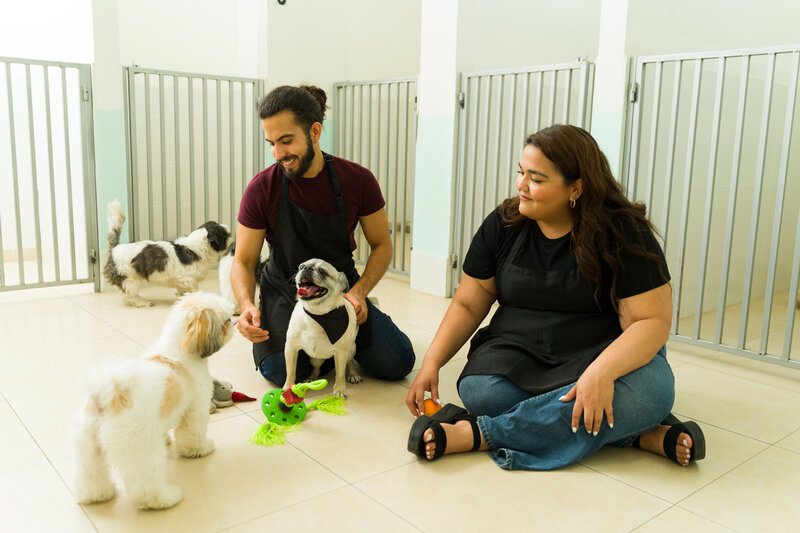
Finally, remember that your dog's level of arousal can change depending on their energy levels, hunger, or stress. Make sure they're well-fed and calm before sessions.
Start With Basic Commands
Teaching your dog to avoid distractions begins with mastering basic commands such as "sit," "stay," and "come." These foundational skills are crucial because they establish a line of communication between you and your dog. By focusing on these commands, you're creating a structured environment that helps your dog understand expectations, even when surrounded by enticing distractions.
Start in a quiet indoor setting free from interruptions. Clearly articulate each command, using a firm yet friendly tone. Consistency is key—use the same word and intonation every time.
Once your dog reliably follows commands indoors, gradually introduce mild distractions, like a toy or another person. This helps your dog learn to focus on you, even when their attention is tempted elsewhere.
Next, shift to an outdoor setting with more distractions. Remember, patience is crucial. Your dog needs time to adjust to the increased complexity of the environment.
If your dog struggles, return to a simpler setting and reinforce the basics before trying again. Practicing frequently will reinforce your dog's understanding and response to commands, forming a strong foundation for tackling more challenging situations in the future.
Use Positive Reinforcement
Building on the foundation of basic commands, using positive reinforcement can greatly enhance your dog's ability to resist distractions. When your dog successfully ignores a distraction and follows a command, immediately reward them. Use treats, verbal praise, or a favorite toy as a reward. The key is to guarantee the reward is something your dog truly values, making them more likely to repeat the desired behavior.
Consistency is essential. Each time your dog responds correctly, reinforce that behavior. This makes it clear to your dog which actions are desirable. Always be prepared with rewards during training sessions, so you can quickly acknowledge their good behavior. This immediate positive feedback helps your dog associate ignoring distractions with positive outcomes.
It's also important to use a positive tone of voice and body language. Your enthusiasm can motivate your dog to focus on you rather than the distraction.
Avoid negative reinforcement or punishment, as these can lead to confusion or anxiety, hindering progress. By focusing on positive reinforcement, you're not just training your dog; you're building a trusting relationship that encourages them to listen and learn.
Gradually Increase Distractions
Once your dog reliably responds to commands using positive reinforcement, it's time to gradually increase distractions.
Begin by adding mild distractions in a familiar setting. You might introduce simple elements like toys or treats placed nearby while practicing commands. Make sure your dog maintains focus on you, rewarding them when they successfully ignore these distractions.
Next, introduce moving distractions. Have a friend or family member walk by or toss a ball in the distance. Keep the distractions low-key initially, ensuring your dog remains attentive. If they start to lose focus, gently redirect them back to you with a cue or treat.
Once your dog can handle these distractions, gradually increase their complexity. You could incorporate more enticing elements, like other dogs or a noisier environment.
Continue using positive reinforcement, praising and rewarding your dog each time they successfully ignore a distraction.
Practice in Different Environments
After your dog successfully ignores distractions in a familiar setting, it's important to practice in different environments. By exposing your dog to various locations, you help them generalize their focus skills. Start with places that are slightly more stimulating than your regular training area. This could be a quiet park or an empty parking lot. The key is to challenge your dog without overwhelming them.
As your dog grows more comfortable, gradually introduce more complex environments. Visit busy parks, dog-friendly cafes, or bustling city streets. Each new setting presents unique distractions, like different smells, sounds, and sights. Use short sessions, ensuring your dog remains engaged and successful.
During these outings, keep your expectations realistic. Your dog may struggle initially, but with patience and consistency, they'll learn to apply their training in diverse contexts. Reward them generously for maintaining focus, reinforcing the behavior you want to see.
Remember to stay calm and patient, as your demeanor influences your dog. If they become overwhelmed, take a step back and simplify the environment. With time and practice, your dog will master ignoring distractions, no matter where you are.
Incorporate Focus Exercises
To help your dog master focus, start by using reward-based training methods that reinforce their attention on you.
Gradually increase the level of distractions in the environment, ensuring your dog learns to maintain concentration in more challenging situations.
Keep the sessions positive and engaging, and you'll see significant improvement in your dog's ability to avoid distractions.
Reward-Based Training Methods
Reward-based training methods offer a powerful approach to teaching your dog to avoid distractions by reinforcing positive behaviors. By using treats, praise, or toys, you encourage your dog to focus on you rather than the tempting sights and sounds around them.
Start by selecting a reward your dog loves, ensuring it's something they only receive during training sessions to maintain its value.
When practicing focus exercises, capture your dog's attention with a command like "watch me" or "focus." As soon as your dog makes eye contact, reward them immediately. This immediate reinforcement helps your dog associate focusing on you with positive outcomes.
Be consistent with this exercise in various environments to strengthen their ability to concentrate. Keep your sessions short and engaging—aim for about five to ten minutes—to prevent your dog from losing interest.
Gradually increase the difficulty by introducing mild distractions, always rewarding your dog when they choose to focus on you instead. This method not only builds your dog's ability to stay attentive but also strengthens your bond.

Over time, your dog will learn that ignoring distractions leads to good things, making outdoor training more enjoyable and effective.
Gradual Distraction Exposure
Building on the foundation of reward-based training, you can enhance your dog's focus by introducing gradual distraction exposure.
Start in a quiet, familiar environment where distractions are minimal. Use focus exercises like "watch me," where you hold a treat near your eyes and encourage your dog to maintain eye contact. Once your dog consistently focuses on you, introduce mild distractions such as a toy or a person walking by at a distance.
Gradually increase the level of distraction as your dog becomes more adept at maintaining focus. Move to environments with more stimuli, like a park, but keep a reasonable distance from the distractions initially. Use a higher-value treat or toy to reward your dog when they ignore distractions and stay attentive to you.
Incorporate brief, consistent training sessions, ensuring that you're not overwhelming your dog with too many distractions too quickly. Patience is key; every dog progresses at their own pace. If your dog struggles, reduce the distraction level and build back up slowly.
Maintain Consistency and Patience
Consistency is the cornerstone of successful dog training, and your patience is the bridge that connects understanding and behavior. When teaching your dog to avoid distractions, you must establish clear and consistent commands. Use the same words and gestures every time you train. This repetition helps your dog understand what you expect, even when there are tempting distractions around.
Incorporate training into your daily routine. Regular practice reinforces learning and reduces confusion. If you only train sporadically, your dog might struggle to grasp what's required. Make training sessions a part of your walks or playtime, ensuring your dog stays focused on you despite potential distractions.
Patience is equally important. Dogs learn at their own pace, and setbacks are normal. If your dog gets distracted, gently redirect their attention without frustration. Remember, progress might be slow, but persistence pays off. Celebrate small victories and maintain a positive attitude, as your dog will sense your mood.
Stay calm and consistent, and don't rush the process. Building these habits strengthens your bond with your dog, ensuring they learn to ignore distractions effectively.
With time, consistency, and patience, you'll see the results you desire.